

If you are struggling with Hashimoto’s thyroiditis weight loss, you are definitely not alone. Many individuals with Hashimoto’s face unique challenges such as hormone imbalances, muscle loss, and stubborn fat that’s difficult to shed. Autoimmune flares, poor sleep, and stress only make these issues worse. You might notice that eating less or intense exercise can actually slow down your metabolism. Additionally, gut health problems and inflammation contribute to the difficulty. Even minor changes in thyroid hormone levels or exposure to toxins can impact your body significantly. Achieving weight loss with Hashimoto’s thyroiditis requires patience, self-compassion, and support from someone knowledgeable about thyroid disease and autoimmune conditions.
Key Takeaways
Hashimoto’s thyroiditis makes your metabolism slow. It also causes hormone problems. This makes losing weight harder, but it is not impossible.
Get a full thyroid lab test. Work with your doctor to find the right hormone balance. Your doctor can help you get the best medicine for your body.
Find out which foods trigger problems for you. Stay away from gluten, dairy, and processed foods. This can lower inflammation and help you lose weight.
Eat foods with lots of nutrients. Keep your blood sugar steady. Take care of your gut health. This can give you more energy and help your thyroid work better.
Do gentle exercise. Try to manage your stress. Get enough good sleep. Stay away from toxins. These things can help your metabolism and your thyroid.
Why Hashimoto’s Makes Weight Loss Hard
Metabolism and Thyroid Hormones
If you have hashimoto’s, your metabolism may feel slow. The thyroid helps your body use energy. When hashimoto’s thyroiditis attacks the thyroid, it can lower thyroid hormone levels. This makes your metabolism slower. Losing weight becomes much harder. You might feel tired or cold. You could gain weight even with healthy eating. Sometimes, lab tests look “normal,” but your metabolism still struggles.
Here is a simple chart about how hashimoto’s affects your body:
Mechanism | What Happens | Why It Matters |
|---|---|---|
Low Thyroid Hormone | Body uses less energy | Metabolism slows, weight goes up |
Thyroid Hormone Resistance | Body does not listen to signals | Losing weight gets harder |
Chronic Inflammation | Immune system attacks thyroid | More symptoms, less energy |
Cells have less power | Burning calories is harder |
Hormonal Imbalances
People with hashimoto’s often have more than thyroid problems. Hormones like high estrogen or low progesterone can block thyroid hormone. This makes symptoms worse and losing weight harder. High TSH and thyroid antibodies are common in hashimoto’s. These show your body is fighting itself. These hormone problems make it tough for your metabolism to work well.
Inflammation and Gut Health
Inflammation is a big part of hashimoto’s thyroiditis. The immune system causes long-lasting inflammation. This can slow your metabolism and make you tired. It also changes hormones that control hunger and fat burning. Gut health is important too. Many people with hashimoto’s have gut problems like constipation or bloating. Bad gut health means your body cannot get nutrients well. This makes losing weight even harder.
Toxins and Environment
Toxins in your environment can hurt your thyroid. Chemicals in plastics, pesticides, and some metals can cause more immune attacks and inflammation. These toxins make thyroid symptoms worse. They also make losing weight harder. Avoiding toxins and helping your thyroid can break this cycle.
Hashimoto’s weight loss resistance is real. You are not making it up. Knowing these problems is the first step to finding what works for you.
Optimize Thyroid for Hashimoto’s Thyroiditis Weight Loss
Lab Tests and Medication
You can’t guess your way to better thyroid health. You need the right lab tests to see what’s really happening inside your body. If you want to make progress with hashimoto’s thyroiditis weight loss, start with a full thyroid panel. This means checking TSH, free T4, free T3, total T4, total T3, reverse T3, and thyroid peroxidase (TPO) antibodies. These tests show if your thyroid hormone levels are low, if your body is making enough active hormone, and if your immune system is attacking your thyroid.
You should also check for nutrients that help your thyroid work well. These include selenium, iron, iodine, and vitamin D. If you have low levels, your thyroid function can drop, making weight loss even harder. Your doctor may also want to check your cortisol, because stress can mess with your thyroid and slow down your metabolism.
Here’s a quick checklist for your next doctor’s visit:
Ask for a full thyroid panel (TSH, free T4, free T3, total T4, total T3, reverse T3, TPO antibodies)
Request nutrient testing (selenium, iron, iodine, vitamin D)
Discuss your symptoms, not just your lab numbers
Bring up any weight changes or energy problems
Tip: Keep a journal of your symptoms and lab results. This helps you and your doctor spot patterns and make better choices for your thyroid health.
T3 and T4 Balance
Your thyroid makes two main hormones: T4 (the storage form) and T3 (the active form). T4 needs to turn into T3 for your body to use it. If you have hashimoto’s, your body might not convert T4 to T3 very well. This can leave you feeling tired, cold, and stuck with stubborn weight. Even if your TSH and T4 look “normal,” you might still have low T3. That means your metabolism can slow down, and hashimoto’s thyroiditis weight loss gets even tougher.
When you lose weight, your T3 levels can drop. This is your body’s way of saving energy, but it can make you feel sluggish. If your T3 drops too much, your body burns fewer calories. You might notice that you hit a weight loss plateau or even start gaining weight again.
A good balance between T3 and T4 is key for thyroid health and weight loss. If your T3 is low, talk to your doctor about your options. Some people do better with a mix of T4 and T3 medication, while others need to focus on improving their body’s ability to convert T4 to T3. Eating enough protein, getting selenium, and managing stress can all help your thyroid hormone balance.
Hormone | What It Does | Why It Matters for Weight Loss |
|---|---|---|
T4 | Storage form, turns into T3 | Needed for steady thyroid hormone supply |
T3 | Active form, boosts metabolism | Directly affects energy and fat burning |
Inactive, blocks T3 | Can slow metabolism if too high |
Medication Adjustments
Getting your thyroid medication right is one of the most important steps for hashimoto’s thyroiditis weight loss. If your dose is too low, you might feel tired, gain weight, or have brain fog. If your dose is too high, you could feel anxious, lose muscle, or have heart palpitations. You need regular lab tests to make sure your thyroid hormone levels stay in the best range for you.
Most people with thyroiditis start with levothyroxine (T4). This works well for many, but some people don’t feel better until they add a little T3 (liothyronine) or try a natural desiccated thyroid medication. There’s no one-size-fits-all answer. Your doctor should adjust your medication based on your symptoms, lab results, and how you feel—not just your TSH number.
Here are some things to remember about thyroid medication and weight loss:
Take your thyroid medication at the same time every day, away from food and supplements.
Tell your doctor if you have digestive issues, as some medications absorb better than others.
If you lose a lot of weight, your medication dose might need to change.
Always work with your healthcare provider before making any changes.
Note: Medication is only one part of the puzzle. You’ll get the best results when you combine the right medication with a healthy diet, stress management, and gentle movement.
If you want to support your thyroid health and boost your chances of successful hashimoto’s thyroiditis weight loss, focus on these steps:
Get the right lab tests and review them often.
Work with your doctor to find the best thyroid hormone balance for you.
Adjust your medication as your body and weight change.
Support your thyroid with good nutrition, sleep, and stress relief.
You can take charge of your thyroiditis journey. With the right plan, you can feel better and finally see progress with weight loss.
Diet for Hashimoto’s Disease and Weight Loss
Choosing the right foods can be hard with hashimoto’s. You may not know which foods help or hurt you. You might worry about losing energy or feeling worse. The good news is you can take steps to help your body. Let’s look at what helps most for weight loss with hashimoto’s.
Eliminate Triggers
Some foods can make inflammation worse. This can make it harder to lose weight. Many people with hashimoto’s notice some foods cause bloating or tiredness. Some even get joint pain. Taking out these foods can help your body feel better. It can also help you lose weight.
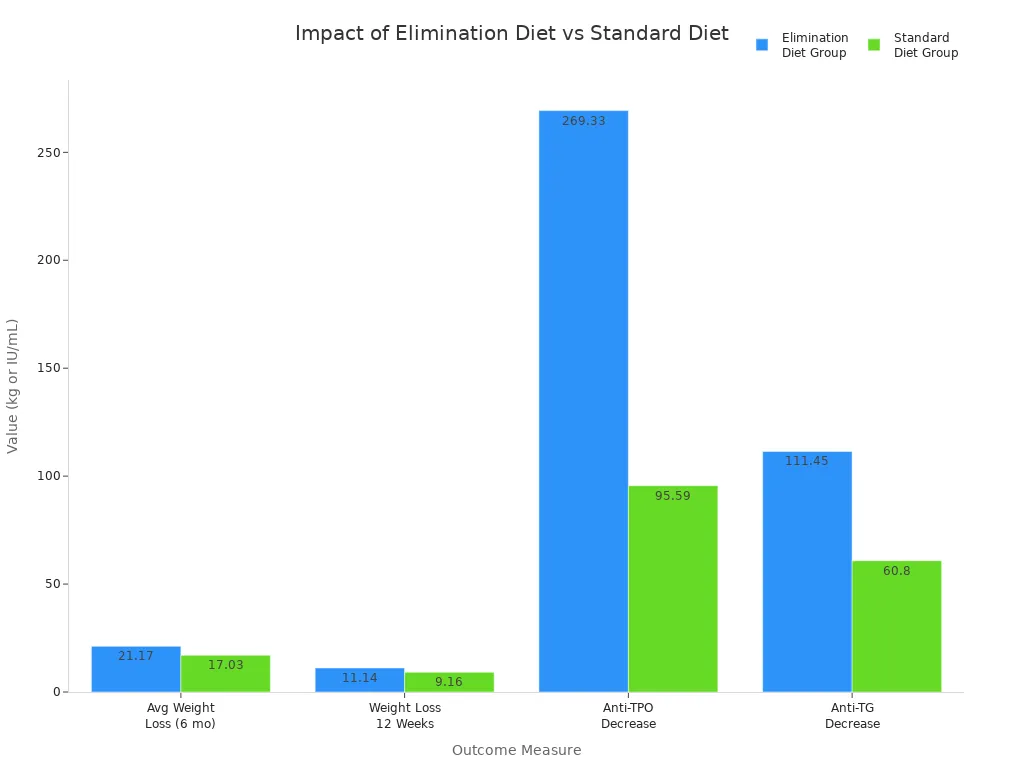
A study looked at two groups. One group ate a normal diet. The other group avoided foods that bothered them. The group that avoided triggers lost more weight. They lost more body fat too. Their thyroid antibodies and hormone levels got better.
Outcome Measure | Elimination Diet Group | Standard Reducing Diet Group | Statistical Significance |
|---|---|---|---|
Average Weight Loss (6 months) | 17.03 kg | p < 0.001 | |
Weight Loss in First 12 Weeks | 11.14 kg (0.92 kg/week) | 9.16 kg (0.76 kg/week) | p < 0.001 |
BMI Reduction | Greater reduction | Less reduction | p < 0.002 |
Body Fat Content | Significantly lower | Higher | p = 0.026 |
Anti-TPO Antibody Decrease | 269.33 IU/mL | 95.59 IU/mL | p < 0.001 |
Anti-TG Antibody Decrease | 111.45 IU/mL | 60.8 IU/mL | p < 0.048 |
fT4 Hormone Level Increase | Higher increase | Less pronounced | p < 0.001 |
fT3 Hormone Level Increase | Higher increase | Less pronounced | p < 0.001 |
You can try an elimination or autoimmune diet. This helps you find which foods cause problems. Common triggers are gluten, dairy, soy, eggs, and processed foods. Take out one food at a time. Watch how you feel. If you feel better and lose weight, you are on the right path.
Tip: Keep a journal of what you eat and how you feel. This helps you see patterns and find your triggers.
Nutrient-Dense Foods
Eating foods full of vitamins and minerals helps your body. These foods help you lose weight and support your thyroid. Fill your plate with fruits, greens, lean protein, and healthy fats. These foods fight inflammation and help your metabolism.
Some of the best foods for hashimoto’s are:
Colorful fruits and veggies
Beans and legumes for fiber and protein
Lean proteins like fish, tofu, eggs, and nuts
Healthy fats from avocado, walnuts, and olive oil
Spices like turmeric, ginger, and garlic
You also need enough vitamin D, selenium, magnesium, zinc, and iron. These help your thyroid and weight loss. Many people with hashimoto’s have low vitamin D. Ask your doctor to check your levels.
Nutrient/Food Category | Examples/Details | Benefit for Hashimoto’s and Weight Management |
|---|---|---|
Anti-inflammatory foods | Fruits, vegetables, beans, whole grains, fatty fish | Lower thyroid inflammation and help symptoms |
Key nutrients | Selenium, vitamin D, magnesium, zinc, iron, B12 | Help hormone production and lower inflammation |
Healthy fats | Olive oil, avocado, nuts, seeds, fatty fish | Lower inflammation and help metabolism |
Foods to avoid | Gluten (for some), lactose, added sugars, refined carbs, saturated fats | Lower triggers that make symptoms and weight worse |
Goitrogenic vegetables | Collards, Brussels sprouts, kale, broccoli, cauliflower (cooked) | Cook before eating to protect your thyroid |
Protein sources | Lean meats, fish, beans, lentils, tofu | Help muscle and metabolism, support weight management |
Note: Cook veggies like broccoli and kale before eating. Cooking makes them safer for your thyroid.
Blood Sugar Balance
Keeping your blood sugar steady is important. If your blood sugar goes up and down, you may feel tired or crave sweets. This can make weight loss harder. Stable blood sugar helps you feel better.
You might feel cranky if you skip meals. You may want sugar or have brain fog. These are signs your blood sugar is not steady. Here’s how to keep it balanced:
Pick carbs like sweet potatoes (yams or white sweet potatoes).
Eat protein with every meal.
Add healthy fats to slow sugar spikes.
Do aerobic exercise to help your muscles use sugar.
Drink water to help your body get rid of extra sugar.
Sleep well to keep your hormones balanced.
A supplement called berberine may help. It can make your body use insulin better. It also lowers inflammation and helps with weight. Always talk to your doctor before trying new supplements.
Callout: If you have trouble losing weight with hashimoto’s, check your blood sugar. Keeping it steady helps you lose weight and feel good.
Intermittent Fasting or Better Yet – Time Restricted Eating
Intermittent fasting is popular for weight loss. You may wonder if it is safe with hashimoto’s. It can be safe if you are careful and talk to your doctor. Fasting can help you lose weight and lower inflammation.
Here’s what happens with fasting and hashimoto’s:
T3 hormone drops during fasting, but TSH and T4 stay the same.
Fasting lowers stress and inflammation in your body.
Your gut health gets better, which helps your immune system.
Fasting can help your body use insulin better and lose weight.
You may need to change when you take your thyroid medicine.
Start with short fasts, like 12 hours overnight. Eat healthy foods during your eating times. Listen to your body. If you feel weak or dizzy, stop fasting and talk to your doctor. Usually, I don’t recommend fasting over 14 hours.
A good diet for hashimoto’s is not about strict rules. It is about finding what helps your body. Support your thyroid and make small changes. You can lose weight and feel better with the right plan.
Gut, Hormones, and Adrenal Support
Gut Health
Your gut does more than digest food. It helps control your immune system and thyroid. Many people with hashimoto’s have gut problems like bloating or constipation. When your gut lining gets weak, it can trigger more autoimmune attacks and inflammation. You can help your gut heal by making a few changes:
Try a gluten-free or anti-inflammatory diet. These can lower symptoms for some people.
Add probiotics and prebiotics to your meals. Foods like yogurt, sauerkraut, and kimchi feed good bacteria.
Take time to chew your food well and eat slowly. This helps your body absorb nutrients.
Avoid processed foods and extra sugar. These can cause more inflammation and resistance in your gut.
Use supplements like selenium, zinc, and vitamin D if your doctor suggests them.
Tip: Keep a food journal to spot which foods make your symptoms worse.
Stress and Adrenals
Stress can make hashimoto’s symptoms much worse. When you feel stressed, your adrenal glands release hormones like cortisol. Too much stress for too long can cause adrenal resistance and slow down your thyroid. This leads to more fatigue, weight gain, and even more resistance to weight loss. Stress also increases inflammation and can mess with your blood sugar.
You can support your adrenals by:
Taking short breaks during the day to breathe or stretch.
Trying gentle exercise like walking or yoga.
Getting outside for fresh air and sunlight.
Making time for hobbies or things you enjoy.
Remember to manage stress every day. Your thyroid and adrenals will thank you!
Hormone Balance
Balancing your hormones is key for feeling better with hashimoto’s. Your doctor may use thyroid hormone replacement to help. You also need to check your levels of nutrients like selenium, zinc, and Vitamin D3. These help your thyroid work well and keep your hormones steady. Gut health, stress, and sleep all play a part in hormone resistance and inflammation.
You can help your hormones by:
Eating a variety of colorful fruits and veggies.
Moving your body every day.
Practicing mindfulness or meditation.
Sleep and Hydration
Good sleep and enough water help your thyroid and your whole body. Poor sleep can make you feel tired, foggy, and slow down your metabolism. Not drinking enough water can cause cramps, dry mouth, and even make sleep worse. Both sleep and hydration help lower inflammation and support your immune system.
Try these quick wins:
Go to bed at the same time each night.
Keep your room cool and dark.
Drink water throughout the day, not just at meals.
Avoid caffeine late in the day.
Note: Small changes in sleep and hydration can make a big difference in how you feel with hashimoto’s.
Reduce Inflammation and Lose Weight
Lower Inflammation
You can lower inflammation and lose weight with some easy changes. Many people with hashimoto’s find that inflammation makes weight loss harder. Try these ideas:
Pick a gluten-free or grain-free diet. Studies show this can lower thyroid antibodies and help your thyroid work better.
Try the Autoimmune Protocol (AIP) diet. This plan helps lower inflammation and helps you feel better.
Eat more fruits, veggies, nuts, seeds, and oily fish. These foods have antioxidants and healthy fats that fight inflammation.
Stay away from processed foods, added sugars, and some animal fats. These foods can make inflammation worse and slow weight loss.
Take vitamin D and selenium if your doctor says to. Both can lower thyroid antibodies and help your thyroid.
Tip: Small diet changes can help you lower inflammation and lose weight with hashimoto’s thyroiditis.
Avoid Toxins
Toxins around you can slow your thyroid and make weight loss harder. Plastics, pesticides, and heavy metals can build up in your body. They can cause more inflammation and make thyroid symptoms worse. Try these steps:
Use glass or stainless steel for food and drinks instead of plastic.
Wash fruits and veggies to get rid of pesticides.
Pick natural cleaning and beauty products.
Drink filtered water.
These habits help your thyroid and make losing weight easier.
Liver Support
Your liver is important for thyroid health and weight loss. It helps turn thyroid hormone T4 into the active T3 form. If your liver has too many toxins, you may gain weight and have trouble losing it. Toxins can build up in fat cells and slow your metabolism. Helping your liver helps your thyroid work better and can make weight loss easier. Stop eating foods like gluten, dairy, sugar, soy, alcohol, and caffeine. Eat whole foods and drink lots of water. Gentle liver support can give you more energy and help you lose weight with hashimoto’s thyroiditis.
Exercise for Hashimoto’s
Exercise helps you lose weight, have more energy, and support your thyroid. You do not need to work out too hard. Low-impact aerobic exercises like walking, water aerobics, yoga, and tai chi are good choices. These activities are easy on your joints and help with tiredness. Strength training, like lifting weights or using bands, builds muscle and speeds up your metabolism. Yoga and tai chi also lower stress and help your mood. Start slow and listen to your body. Mix exercise with good sleep and stress management for the best results with hashimoto’s thyroiditis weight loss.
You can take charge of your thyroid health. Start with small steps and keep track of your progress. Focus on your thyroid labs, eat foods that help your thyroid, and support your gut. Try gentle movement and get enough sleep. Celebrate every win, even the small ones. If you feel stuck, talk to a thyroid expert. Remember, your thyroid journey is unique. Stay patient and kind to yourself.
Tip: Keep a journal to see how your thyroid changes and what helps you feel better.
FAQ
Can you lose weight with Hashimoto’s thyroiditis?
Yes, you can lose weight with Hashimoto’s. It may take longer, but small changes add up. Focus on your thyroid health, eat nutrient-rich foods, and move your body. Track your progress and celebrate every win.
What foods should you avoid with Hashimoto’s?
You may want to avoid gluten, dairy, soy, and processed foods. These can trigger inflammation for some people. Keep a food journal to spot your triggers. Always talk to your doctor before making big changes.
How much exercise is safe with Hashimoto’s?
Gentle exercise works best. Try walking, yoga, or swimming. Listen to your body. If you feel tired, rest. You do not need intense workouts to see results.
Do you need to take supplements?
You might need supplements like vitamin D, selenium, or zinc. Your doctor can check your levels and help you choose what you need. Do not start new supplements without medical advice.
How long does it take to see weight loss results?
Everyone is different. Some people see changes in a few weeks. Others need more time. Stay patient and keep going. Small steps lead to big results.
Tip: If you feel stuck, reach out to a thyroid expert for support.